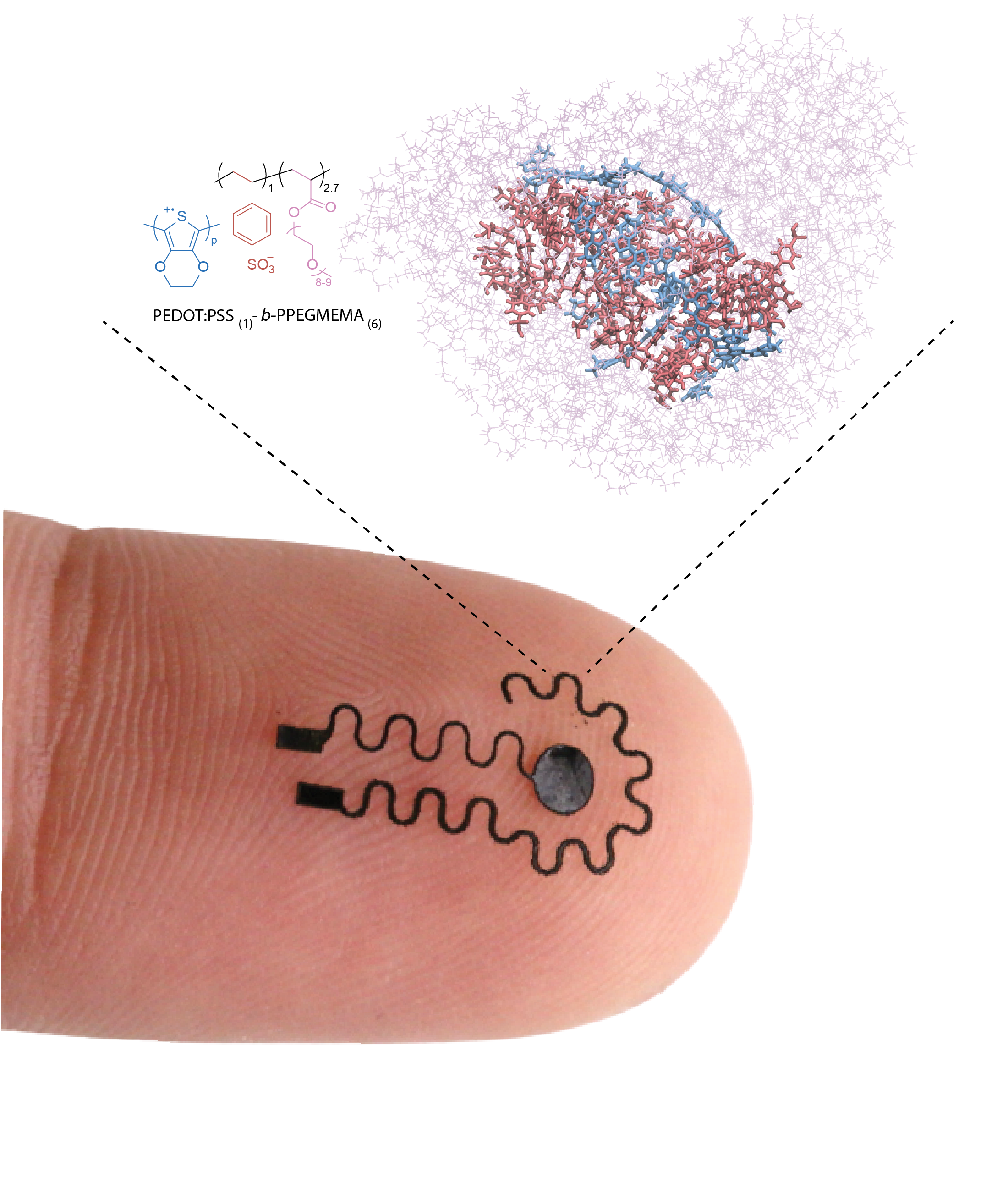
Conductive block copolymer elastomers and psychophysical thresholding for accurate haptic effects
Electrotactile stimulus is a form of sensory substitution in which an electrical signal is perceived as a mechanical sensation. The electrotactile effect could, in principle, recapitulate a range of tactile experiences by selectively activating nerve endings. However, the method has been plagued by inconsistency, galvanic reactions, pain and desensitization, and unwanted stimulation of nontactile nerves. In this project, we describe how a soft conductive block copolymer, a stretchable layout, concentric electrodes, and psychophysical thresholding can circumvent these shortcomings. These purpose-designed materials, device layouts, and calibration techniques enable accurate, reproducible sensations across a cohort of 10 human participants at ultralow currents (≥6 microamperes) without pain or desensitization. This material, form factor, and psychophysical approach could be useful for haptic devices and as a tool for activation of the peripheral nervous system.